Clunes Common long closed to the public

While not many people would realise it today, most towns in this region, indeed across Victoria, had areas set aside known as Town Commons.

Words by Anthony Sawrey, with permission of The Local

Research by James Curzon-Siggers

It was just one instance of the widespread colonial practice in the 19th century of reserving specific pieces of land for a variety of public uses.

By 1890 more than 6,000 square kilometres existed as officially designated common land. Unfortunately much of this land has been divided up, built upon and sold off over the years and there are very few intact examples to be found anywhere in the state. However Clunes is one of those rare exceptions.

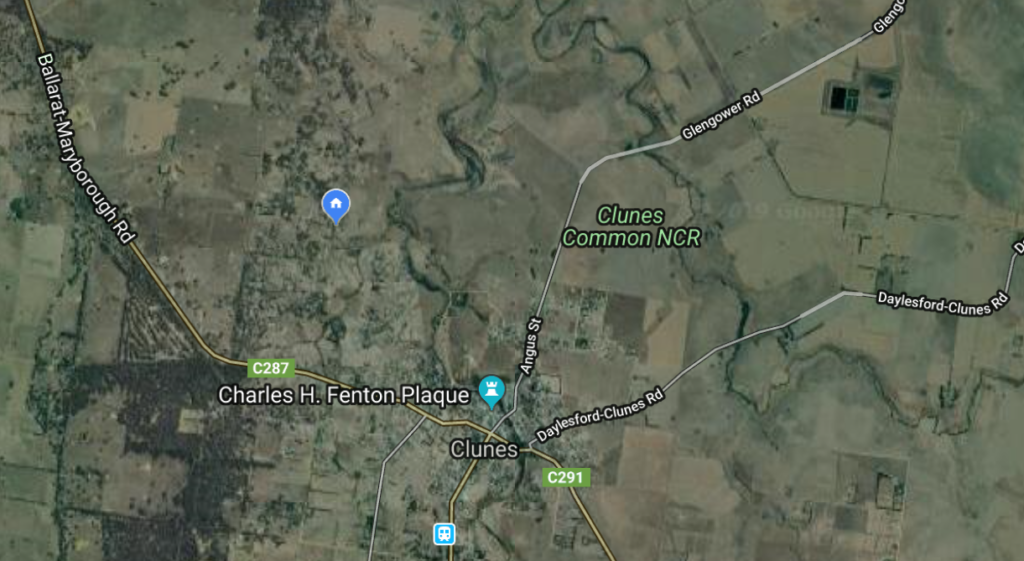
If you want to go and see it, the Clunes Town Common lies north of the present township, straddling Glengower Road. Bracketed by Birch Creek to the east and Creswick Creek to the west it covers about 216 hectares. Its boundaries remain as they were set when first proclaimed by the Victorian Parliament in 1861.

In those times, well before the advent of modern social welfare support, town commons were an essential part of the fabric of the surrounding community; as pointed out by researcher Ben Maddison in A Kind of Joy-Bell: Common Land, Wage Work and the Eight Hours Movement In Nineteenth Century NSW. “In 19th century New South Wales (and Victoria) the commons – denominated as either Temporary or Permanent…were set aside for travelling stock, pasturage, timber, water, indigenous communities, camping, recreation, ‘public purposes’ (schools, churches, cemeteries) and village, town and suburban expansion.”

In local terms this meant that “every inhabitant within the Municipal District of Clunes be entitled to departure six head of cattle or horses on the common”, and that a herdsman receiving a wage of 50 pounds per annum would be appointed to manage stock placed there. Later both Chinese and European residents could pay five shillings for a garden licence issued by the Department of Land and Survey (today’s DELWP) to “enter upon Crown Land not exceeding in area one acre for the purposes of garden and residence”.

However, unlike in the English tradition of productive common lands which had always been an insurance against hard times, common lands in the colonies were often little more than a resource to be exploited. The often became a locus of competition or conflicts over stocking rates and boundary maintenance and were frequently neglected with weeds, rabbits and mining activity contributing to their eventual decline.

The Clunes Common suffered from these issues and by 1918 the Ballarat Courier had a small news item titled: Clunes Common Recommended for Subdivision. But while the other town commons were carved up the Clunes Common remained largely intact and in regular use right up to 1960s. One of those people who remembers it well is John Overberg who settled in Clunes with his parents and five siblings from Holland in 1955.

“We had a house cow, as many people used to in those times, for milk and to make our own butter, cream and cottage cheese. The cow would stay at the house overnight but after milking in the morning you would just let it loose on the common and after school you would collect it and milk again. Sometimes you had to walk a couple of miles to find her. We also had about 16 goats there. The common was certainly an important asset to people like us to help make ends meet. It was also a great playground as we grew up.”

But by the turn of the 1970s the Clunes Common was little more than unused public land and was leased to a local farmer. It is now fully fenced and off-limits to the public. But few tears were shed at the time because society had moved on.

The old dependence on laborious activities such as maintaining a milking cow was hardly necessary when supermarkets could provide such produce cheaply and reliably. What’s more, with the emergence of the sort of social security net taken for granted today families no longer have to grow their own food or collect their own milk to survive, they can do it for fun.

There is also the fact regional councils no longer allow dairy cows to wander on the outskirts of towns nor permit mobs of goats to amble down suburban streets looking for blackberries to eat. The past is certainly another country.
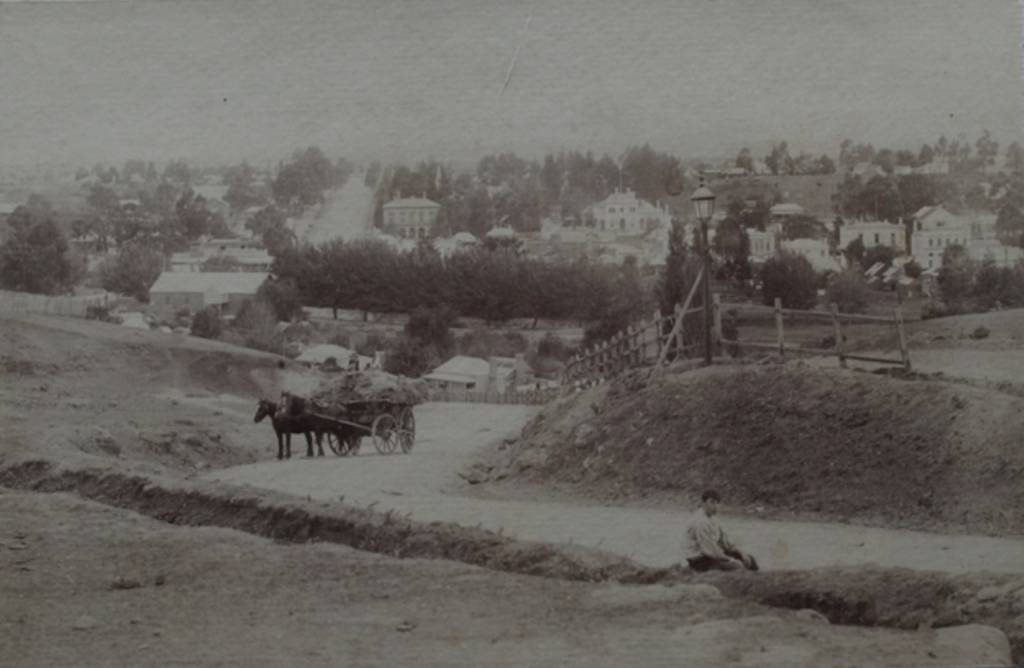
Heading up Angus Street towards the Common, 1900-1905
Current aerial view of the Common

Our Kitchen Concepts

AMSTERDAM KITCHEN

We Produce Great Concepts Out of the ordinary for

Lorem ipsum dolor sit amet, consectetur adipiscing elit, sed do eiusmod tempor incididunt ut labore et dolore magna aliqua. Ut enim ad minim veniam, quis nostrud exercitation ullamco laboris nisi ut aliquip ex ea commodo consequat. Duis aute irure dolor in reprehenderit in voluptate velit esse cillum dolore eu fugiat nulla pariatur. Excepteur sint occaecat cupidatat non proident, sunt in culpa qui officia deserunt mollit anim id est laborum.

PRODUCT CODE

#25232521

DESCRIPTION

Lorem ipsum dolor sit amet, consectetur adipiscing elit, sed do eiusmod tempor incididunt ut labore et dolore magna aliqua. Ut enim ad minim veniam, quis nostrud exercitation ullamco laboris nisi ut

Our materials are extremely high quality and MDF wood.

Lorem ipsum dolor sit amet, consectetur adipiscing elit, sed do eiusmod tempor incididunt ut labore et dolore magna aliqua ut enim ad minim veniam

Waterproof in Furniture, 10 Years Warranty in Excellent Quality Mdf is used.
We use real marble protected against scratch and breakage.
We Prefer Reliable Brands, Stainless and Stainproof Faucets
We Reflect Your Pleasure Everywhere. Magnificent Sinks

Free Consultant Kitchen and Bathroom Design

Lorem ipsum dolor sit amet, consectetur adipiscing elit, sed do eiusmod tempor incididunt ut labore et dolore magna aliqua ut enim ad minim veniam

” Wasn’t the Chinese a man and a brother?” : the Clunes 1873 Riot Exhibition

By James Curzon-Siggers, Clunes Museum President

The Clunes Museum and Ballarat’s Federation University are collaborating on a a major exhibition which will focus on that signature event in the history of our town – the industrial action and strike of late 1873 at the Lothair mine which culminated in the events of December 9, 1873, often categorized as an anti-Chinese race riot by many historians writing generalist histories. In-depth research reveals a different and more complex story. This was a major event in the history of the goldfields, in the development of Australian trade unionism and, according to some, the making of the White Australia policy. The exhibition will be held next year to coincide with the International Booktown Festival in May and runs from mid-April to the end of May. Professor Keir Reeves and the team at Federation University’s Australian History Dept. will guest curate the exhibition. Can you help? We will look at this iconic Clunes event and its myths from a range of perspectives and there will be a focus on the individuals involved such as Peter Lalor, a Lothair mine director; Robert Bryant, the mine manager; William Blanchard, 1st President of the Clunes Miners’ Association and Mayor as well as wives and women, the strikebreakers, the miners, the Clunes Marching Band, the police and Chinese living in Clunes, Creswick and Ballarat.

If you think you have any old photos or documents or mine plans or maps or letters or lithographs or information about individuals that may be relevant, we’d like to hear from you. Contact me on 0412853410 or through the Museum.

Sagacity of Ants

Articles from the Clunes Guardian and Gazette-April 1905

A friend of mine was greatly pestered with ants. In order to keep them off certain edibles, he surrounded the dainties with a belt of sticky material too tenacious for the tiny feet of the pests. But they were equal to the emergency. Some repairs had been effected in the adjoining yard, and the bits of plaster were lying there. The ants made a concerted effort and carried off fragments of the plaster, and placed them on the adhesive mixture until it was bridged over, and they could continue their feast. What Japanese engineer could have done that better?

Clunes Museum Now On Facebook

The Museum is now on Facebook! Hit like on the Clunes Museum page and enjoy posts and photos about our town’s rich history from deep inside the Museum’s archives.

The Museum is now on Facebook! Hit like on the Clunes Museum page and enjoy posts and photos about our town’s rich history from deep inside the Museum’s archives: https://www.facebook.com/clunesmuseum/

Since the start of the year, the Museum has had a new website. It uses responsive software so you can easily view it on your smartphone. We’ll be adding new features and making improvements as we go along. Thanks to Wordsworth Communicating for doing such a great job.

We have also started using a new digital cataloguing program called Victorian Collections. This has an online facility so anyone can see what we have in our collection and in our archives, items not currently on display, as well as items from all other local history museums that use the same software: https://victoriancollections.net.au/organisations/clunes-museum?page=1-2&rnd=vu0#collection-records

At our next monthly meeting, we’ll be considering special projects for the next 12 months. These include a special exhibition to coincide with next year’s May Booktown Festival, an Oral History program and an Annual Clunes Museum Walking Tour. Volunteers always made
welcome. If you’re interested, our contact details are on the website.

Clunes Cannon (Part 2)

The Destiny of “Major Baden Powell”

This article follows on from Clunes Canon (linked here)

Last month a brief history of both of Clunes’ two cannons was outlined up to the end of World War One (The Great War), 11/11/1918. During end-of-war celebrations on that day, the smaller of the two cannons was over charged with gunpowder (the extra being “for the King”) and on firing, the cannon burst into large chunks that lobbed into properties around Clunes township.

One of these chunks of metal was incorporated into a rock garden wall for many years, and was donated in 2012 by Mr Syd Tancredi to Naval Historian Mr John Rogers, President of “Friends of the Cerberus”. Clunes Museum also has a chunk of the burst cannon in it’s collection. According to Mr Rogers, the surviving Clunes cannon, a 32 pounder, was larger than the burst cannon and had been christened ‘Major Baden Powell’ in 1900 when the news came through that British forces had been able to occupy Pretoria during the Boer War.

Major Baden Powell, the Clunes 25 cwt, 32 pounder (1.3 tonne, 14.5 kg) smooth bore cannon is one of seven surviving guns that served on Her Majesty’s Colonial Ships: the ‘Victoria, the ‘Sir Henry Smith’ and the gun raft ‘The Elder’. Positioned for many years on the hill above the sports oval, the cannon came under fire in 1944, not from enemy attack but by a devastating bushfire. As a result the wooden undercarriage was completely burned away and the cast iron barrel was conveyed to the Clunes Council yard where it lay for 40 years.

In 1985, with support from Clunes residents and Clunes Museum, a new wooden undercarriage was built by apprentices at Bendigo Ordnance Factory using timber cut from an Elm tree that had grown alongside Creswick Creek. The newly assembled cannon was then displayed in the Rivet Bland room in the Museum until the Museum building refurbishment commenced in 2012, when the cannon was loaned to be part of the Navy display in the Geelong Naval & Maritime Museum.

When building works were completed about two years ago, and the Museum became part of the “The Warehouse” at Clunes, the cannon couldn’t be displayed inside due to a reduction of display space. Instead of returning to Clunes, permission was given to the Williamstown Maritime Museum at Seaworks’ Naval Dockyard to display our cannon, and it remains there today.

Even though the cannon is the most valuable item in Clunes Museum’s collection, until a suitable area can be arranged for it to be displayed in Clunes, one that protects it from the weather, it is destined to remain on loan to various historical organisations around the State of Victoria as a travelling exhibit.

Clunes Cannon

For several decades two cannons were positioned on the heights above the current sports oval. Every New Year’s Eve, one of the cannons was given a blank charge, (gunpowder but no cannonball) and was fired at the stroke of midnight to announce the start of a new year.

Cannons have a long and illustrious history which began shortly after the Chinese invented gunpowder more than 1000 years ago. European wars were fought with bows and arrows, yet at the same time Chinese armies employed cannons.

The earliest cannons were little more than cast pipes made from bronze or brass that had a uniform smooth bore and fired a spherical ball projectile. Very few of these early cannons exist today since efforts to increase their range by adding more and more gunpowder led to bursting of the cannon wall.

As the use of cannons in warfare spread from Asia to Europe over the next 700 years the only major improvement in cannon design was to increase the wall strength by switching materials to cast iron. This change permitted a higher charge of gunpowder to be used, giving the cast iron cannon a much greater range than a cannon of the same size made from bronze.

Cannonballs were spherical and made to a standard weight, which related to a standard bore diameter. Typically the weight of the gunpowder charge was one third of the projectile weight, so the Clunes cannon, which has a 32lb (14.5kg) cast iron ball projectile, would be loaded with an 11lb(5kg) load of gunpowder.

All cannons were heavy, and although smaller cannons could be mounted on horse-drawn carriages and moved about, this was impractical for larger cannons, which were mounted in fixed locations such as a fortress wall or on the gun deck of a sailing ship.

When the Colony of Port Phillip District became the independent State of Victoria there was a need for defence from potential international aggressors. The State of Victoria purchased a warship in 1867, the HMS Nelson, which had been launched in 1814. By 1898, the cannons the ‘Man o’War’ sailing ships fired became obsolete. The government of the day offered these muzzle loading cannons to country towns free of charge except for transport. Preference was given to regional towns not already defended by forts.

Two were secured by the township of Clunes and for several decades were positioned on the heights above the current sports oval. Every New Year’s Eve, one of the cannons was given a blank charge, (gunpowder but no cannonball) and was fired at the stroke of midnight to announce the start of a new year.

At 11am Paris-time on the 11th of November, 1918 The Great War ended. There were wild celebrations in Clunes with singing and dancing in the streets, liquor flowing freely, together with regular firing of the two cannons on the hillside. In charge of the Artillery was Mr Bill Davies who had overly indulged in refreshments, and as a result lost count of which cannon had been loaded with gunpowder. This resulted in one of the cannons being loaded twice and on detonation, the cannon shattered into pieces. One piece landed in front of the Clunes Town Hall, while other chunks fell on residents properties.

Fortunately no one was killed, but a young boy sustained a lacerated leg and was taken to Clunes Hospital where the local doctor attended to his wound. The medical treatment was carried out at no cost, however a bill was submitted to the boy’s parents for transport to the hospital. The bill was returned unpaid with a note that it should be paid by the Council. The council returned the bill with a request that it should be forwarded to Mr Bill Davies, the man who detonated the cannon. Mr Davies returned the bill as he could not recall who fired the cannon, and insisted it could have been fired by anyone in the crowd. It seems the bill was never paid.

Many townspeople have been curious as to the location of the surviving Clunes cannon. It is has been to Geelong Maritime Museum, but is now currently on loan to ‘Seaworks’ at Williamstown Dock under cover, on display in front of reception. It is anticipated that our cannon will return to Clunes once suitable shelter can be built for it.

Addendum A recent communication from Marine History researcher, Mr Keith Quentin, has indicated that the Clunes Cannon may have come from HMS Victoria, not HMS Nelson as first thought. It is expected his research will be finalised later this year and will positively establish the source of the Clunes Cannon.

Continued in Clunes Cannon (Part 2)

The use of Electric Bells in houses

Articles from the Clunes Guardian and Gazette – March 1897

The use of Electric Bells in houses has almost entirely taken the place of that of the ordinary bell with cranks and wire. The latter were a frequent source of annoyance and expense through the wires breaking.

The Electric Bell, on the other hand, if properly fixed, is easily kept in order. Again, burglar alarms may be fixed on the doors and windows, so that of any are opened the Electric Bell will ring to alarm the household.

Burglars have been again and again disturbed and caught in this way